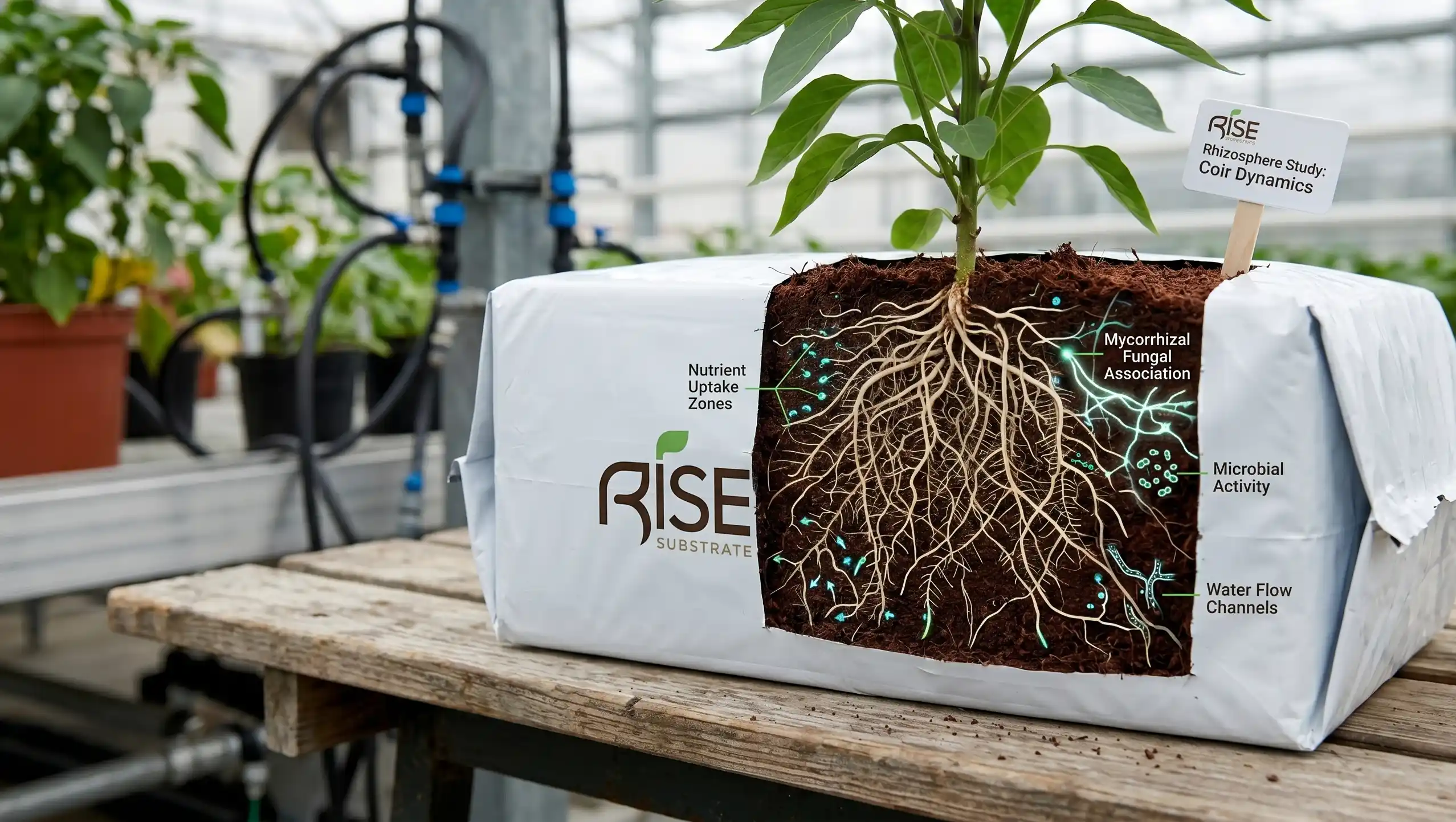
In modern horticulture, the rhizosphere—the narrow zone of soil or media directly surrounding plant roots—is recognized as the engine of crop health and yield. The physical and chemical structure of this root zone directly determines nutrient uptake efficiency, oxygen levels, and susceptibility to soil-borne pathogens. Coconut coir has emerged as a premium hydroponic media specifically because of its unique properties within the rhizosphere.
The Balance of Aeration and Moisture Retention
Unlike soil, which can compact over a single growing season, or rockwool, which can retain too much water at the bottom of the slab, coco coir holds a distinct balance. The organic coir pith behaves like a series of microscopic sponges, retaining capillary moisture, while the coarser coir fibers create macro-porosity spaces.
This macro-porosity is essential for maintaining an optimal Air-Filled Porosity (AFP) range of 22% to 28%. When roots have continuous access to oxygen, they undergo aerobic respiration, producing the ATP required for active nutrient absorption. Without sufficient AFP, roots become hypoxic, resulting in stunted development and increased risk of Pythium infestation.
Cation Exchange Capacity (CEC) in Coir
Coco coir naturally possesses a moderate Cation Exchange Capacity (CEC) ranging from 60 to 100 meq/100g. This is dramatically higher than inert media like rockwool or perlite, which have a CEC of zero. A high CEC allows the coir to chemically buffer the root zone, holding onto vital positively charged nutrient ions like calcium, magnesium, and ammonium.
However, this requires commercial growers to carefully pre-treat the coir before planting. In raw coir, the exchange sites are filled with sodium and potassium. During pre-plant hydration, calcium is introduced to displace the sodium and potassium, flushing them out and creating a highly stable nutrient environment for the crop.
Rise Substrates note: Our process is water wash and sun dry only — delivering clean, low-EC substrate. Any further pre-treatment is at the grower’s discretion based on crop type and fertigation programme.
Enhancing Beneficial Microbial Colonization
Because coir is an organic material made of lignin and cellulose, it provides a supportive structure for beneficial root-zone microorganisms, such as Trichoderma and mycorrhizal fungi. These microbes form symbiotic relationships with root systems, improving water absorption and actively shielding root surfaces from pathogenic bacteria.